
Faucet Installation in Bensalem: Done Right the First Time
New faucets fitted right, with the shutoff valves and supply lines checked first.
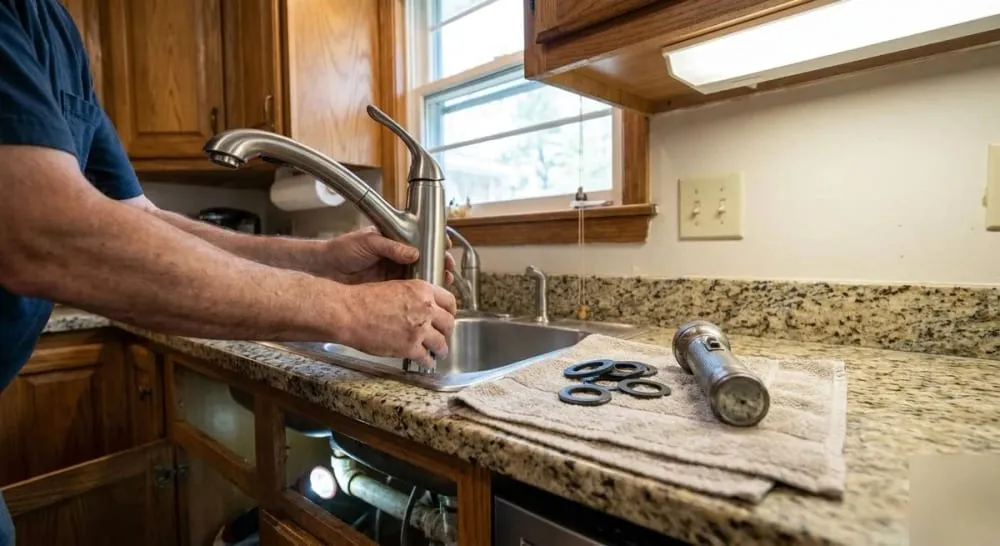
Signs Your Faucet Needs Replacing, Not Repairing
Quick Summary
A dripping faucet with worn washers is usually a repair. A faucet with corroded valves, stripped fittings, or a cracked base is telling you it's done, and faucet installation is the smarter move. If you're replacing parts more than once a year, that's your sign.
Here's the thing about faucets: they don't usually fail all at once. They wear down slow, then one day you're standing at the sink wondering why you've called a plumber twice this year for the same fixture. That pattern right there is your answer.
We see this often in Bensalem's older homes, especially near the township's historic areas where original plumbing fixtures have been swapped out over the decades but never quite matched to what's underneath. A repair on a faucet that old is basically a band-aid. The valve seats are worn, the metal's fatigued, and a new washer just buys you a few more months.
- Constant dripping even after you've replaced the washer or cartridge
- Water pressure that sputters or changes without you touching the handle
- Visible corrosion or green staining around the base or supply lines
- The faucet wiggles or feels loose no matter how much you tighten it
- You can't find replacement parts because the model's discontinued
That last one trips people up. You'd be surprised how often we show up to fix a faucet and the parts just don't exist anymore. Nine times out of ten, that's when we talk replacement instead of chasing parts that don't fit right.
If your faucet's under ten years old and just dripping, that's usually a quick fix, not a full faucet installation job.
When a Quick Fix Beats a Full Installation
Not every dripping faucet needs to come out. Sometimes it's just a worn washer or a cracked cartridge, and that's a repair, not a faucet installation. We hear this often — someone calls convinced they need a whole new fixture, and it turns out the body is fine, it's one small part that failed.
So how do you know which one you're dealing with? A few signs point toward repair instead of replacement.
- The faucet is under ten years old and the finish still looks decent
- The drip only happens from one handle, not the whole unit
- Water pressure is fine everywhere else in the house
- There's no cracking, staining, or corrosion around the base
- The handle turns smoothly with no grinding or looseness
If your faucet checks those boxes, we'll tell you straight — a repair is probably the cheaper and faster fix. But if the valve seat is corroded or the mounting nut is rusted solid to a supply line from the 1980s, that's a different story. Older homes near Bensalem Township's historic areas often still have those original setups. Once a valve body starts leaking internally, patching it just buys you a few more months before you're back to square one.
Not sure which category you're in? That's pretty common, and it's a fair question to ask before spending anything. A quick look under the sink usually tells us which way to go.
What Older Bensalem Homes Reveal During Installation
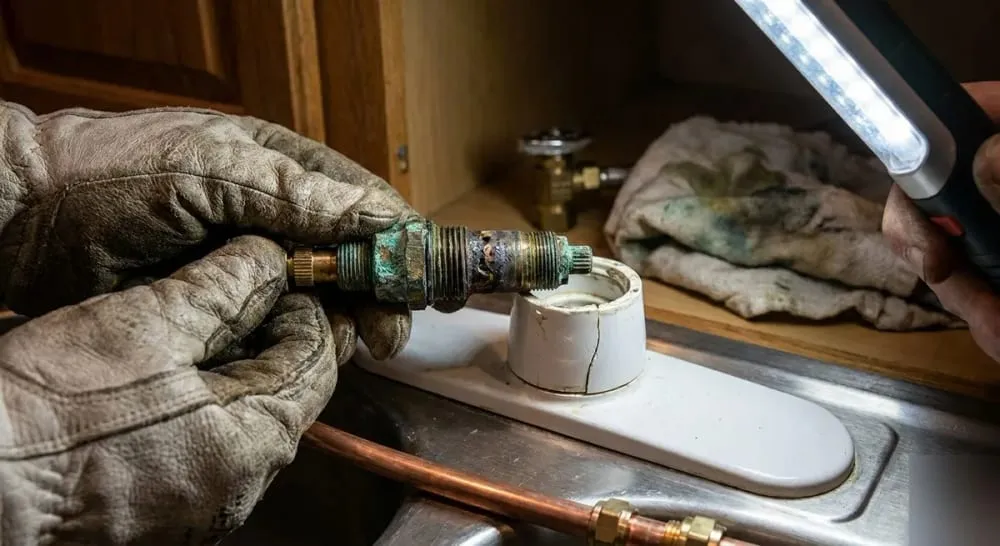
Pull a faucet in one of the older homes near Bensalem Township's historic areas and you never quite know what's waiting under the sink. We run into this often. The supply lines might be original to the house, the shutoff valves might be frozen solid, or the cabinet floor might be soft from years of a slow drip nobody noticed.
Nine times out of ten it's the same thing: old shutoff valves that crumble the second you touch them. That's not a faucet problem, that's a house problem, and it's exactly why we check the whole setup before we ever open a box.
- Corroded or seized shutoff valves that need replacing before the new faucet goes on
- Supply lines sized for old fixtures that don't match today's connectors
- Cast iron drain sections tied into the sink that show rust or scale buildup
- Cabinet bases with water damage hidden behind the faucet's base plate
- Uneven or worn countertop cutouts from decades-old faucet styles
Newer places along the Street Road and Route 13 corridors are usually simpler jobs — the fixtures are newer, the valves turn, the lines match up. But even there, we've caught additions that weren't quite brought up to code, which turns a quick faucet swap into a bigger conversation before anything gets installed. That's the whole point of doing this the right way.
How Faucet Installation Pricing Works
Let's talk money, because everybody wants to know before they even ask. Faucet installation pricing in this trade usually comes down to a handful of things, not some mystery formula. The faucet itself matters — a basic single-handle kitchen faucet goes in faster than a widespread three-hole bathroom set or a commercial pull-down unit with extra spray functions. More parts, more time.
Then there's what's underneath the sink. That's the part homeowners forget about. In a lot of Bensalem's older homes, especially near the township's historic areas, we open the cabinet and find supply lines and shutoff valves that haven't been touched in decades — corroded valves, old compression fittings, sometimes galvanized pipe still hanging on. If those need replacing before the new faucet can go in, that's added labor. Newer homes along the Street Road and Route 13 corridors tend to have modern shutoffs and PEX supply lines, so the swap goes quicker.
- Type of faucet: standard, pull-down, touchless, or commercial-grade
- Condition of existing shutoff valves and supply lines
- Whether the sink or countertop needs any modification
- Access — tight cabinets and old under-mount sinks slow things down
- Any extra work like a garbage disposal reconnect or water filtration hookup
Before you hire anyone, ask them straight up: does the quote include new supply lines if the old ones are bad? Is shutoff valve replacement covered if it won't hold? Those two questions alone will tell you a lot about whether you're getting a real number or a lowball that grows once the job starts.
The Faucet Installation Process, Step by Step
Here's the thing nobody tells you about faucet installation. It's not just unscrewing one faucet and screwing in the next. We treat every job like there might be a surprise waiting under that sink, because nine times out of ten, there is.
- We shut off the water and check the shutoff valves themselves. In a lot of Bensalem homes with older plumbing, those valves haven't been touched in years and sometimes need replacing before we go any further.
- We pull the old faucet and take a real look at the sink deck, the supply lines, and the drain assembly underneath.
- We check your water pressure and line condition, since that tells us if anything else nearby needs attention while we're already under there.
- We dry fit the new faucet to make sure it matches your sink's hole configuration and countertop thickness.
- We connect new supply lines, seal everything properly, and secure the faucet so it doesn't wobble or shift over time.
- We turn the water back on slow, watching every connection for even a hint of a drip.
- We run the faucet through hot and cold, check the sprayer or pull-down feature if it has one, and test the drain.
That last step matters more than people think. A faucet can look installed and still leak slow enough that you won't notice for weeks, until there's water damage under the cabinet. We've opened up more than a few cabinets in Bensalem Township's older homes and found soft, water-stained wood from a faucet that was never checked properly the first time. That's the kind of thing we're trying to catch before we leave, not after you call us back.
Most single faucet swaps take under two hours once we're set up. Add extra time if the shutoff valves need replacing or the old faucet was caulked in like it was never coming out again — we've seen that plenty.
Frequently Asked Questions
How do I know if my faucet needs replacing instead of repairing?
Constant dripping after a new washer or cartridge, wobbly handles, or corrosion around the base are signs you need faucet installation, not another repair. If you've called a plumber twice for the same fixture in a year, that's your answer. We see this a lot in Bensalem's older homes, where original fixtures were swapped out over the years but never matched to the plumbing underneath. Once parts are discontinued, replacement is usually the smarter call.
Can a dripping faucet just be repaired instead of replaced?
Yes, if your faucet is under ten years old, drips from only one handle, and has no corrosion, a repair is usually cheaper and faster. We check the finish, the handle action, and water pressure before recommending anything. It's common for someone to call thinking they need a whole new faucet, when really it's one worn cartridge. A quick look under the sink tells us which direction makes sense.
What problems show up when installing faucets in older Bensalem homes?
Corroded shutoff valves, mismatched supply lines, and hidden water damage are the most common surprises in Bensalem's older homes. We often find shutoff valves that crumble the moment they're touched, which isn't a faucet issue, it's a house issue. That's why we check the whole setup under the sink before installing anything new, especially in homes near the township's historic areas.
Are newer homes in Bensalem easier for faucet installation?
Generally yes, homes along the Street Road and Route 13 corridors tend to have modern PEX supply lines and shutoffs that work smoothly. That makes for a quicker swap compared to older homes with original plumbing. That said, we've still found additions in newer homes that weren't brought up to code, so we always check the setup first before assuming it's a simple job.
What should I ask before hiring someone for faucet installation?
Ask what's included beyond the faucet itself, like shutoff valve replacement or supply line updates, since those add labor time. Pricing depends on the type of faucet, the condition of what's under your sink, and how accessible the cabinet is. Getting a clear answer on these factors before you book helps you avoid surprises once the work starts.
What happens if my shutoff valves are too old to work with a new faucet?
Old, corroded shutoff valves usually need replacing before a new faucet can go in safely. This is common in Bensalem's older homes, where valves haven't been touched in decades and crumble under any pressure. We check these during the initial look under the sink, so you know upfront if that extra step is needed before installation begins.
Need faucet installation today?
We serve every neighborhood in Bensalem and are usually nearby. Call now or request a visit and we'll confirm a window.
Don't wait until it's an emergency
A small drip becomes a ceiling stain. A slow drain becomes a backup. Call (215) 352-4688 now — we answer around the clock and can get a licensed plumber to your door fast.