
Toilet Repair in Bensalem: Fix It Right the First Time
Running toilets, clogs, wobbling, and base leaks — diagnosed before anything's replaced.
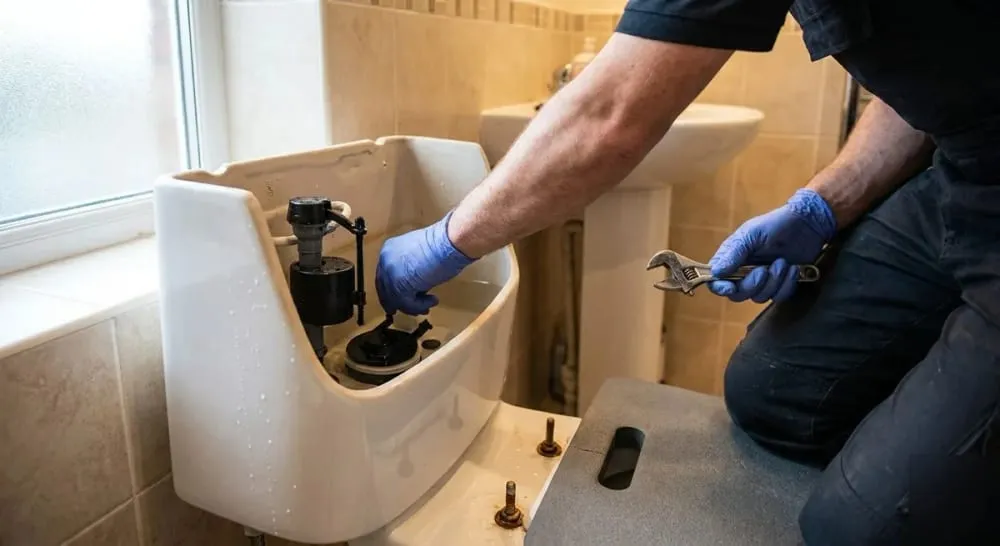
Common Toilet Problems and What They Signal
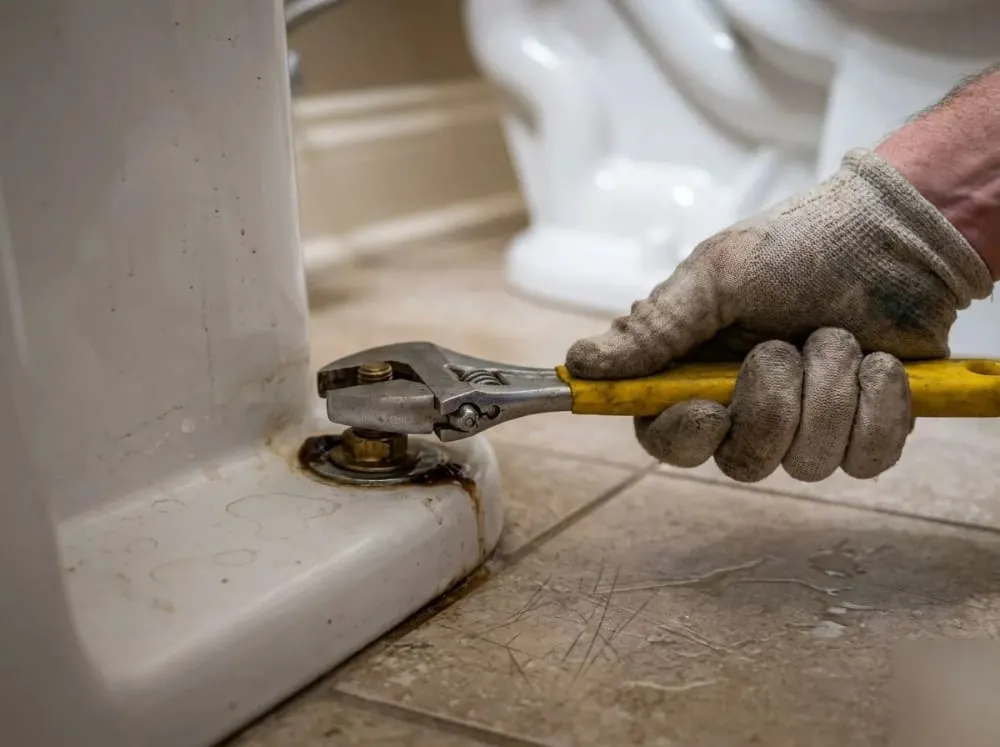
Quick Summary
When a toilet breaks, it's helpful to know what's wrong with it, since that can help you determine how urgent a repair is. Toilets generally fail in one of a handful of ways: running constantly, rocking on the floor, clogging repeatedly, or leaking at the base. Each of those points to a particular issue or set of issues.
A common issue is a toilet that rocks side-to-side when sat upon. This typically indicates either a failed wax ring or a cracked flange, both of which can allow water to leak into the sub-floor without your knowledge for weeks. Another common issue is the toilet that runs all night. Nine times out of ten this indicates either a fill valve that will not shut off, or a deteriorating flapper. Either way, it's a simple fix.
As we're servicing homes in and around Bensalem, we're called to repair and resolve the same issues time and time again. Here are the most common ones we encounter.
- Common causes of constant running or phantom flushing include problems with the flapper, fill valve or the flush valve seat.
- Poor or incomplete flushes. This is commonly caused by a clogged rim jet or a water supply valve not fully opened.
- A failure of the wax ring, or damage to the flange can make your toilet feel loose, or make it rock when sat on.
- Leaking at the base of the toilet after flushing indicates a failed seal and needs to be repaired ASAP.
- If one toilet clogs repeatedly, there may be a venting problem in the plumbing. Some low-flow toilets also had a design problem, resulting in frequent clogging.
Say that an older home resident living close to one of the more historic parts of Bensalem Township calls us after dealing with repeated toilet clogs. Chances are the toilet itself isn't at fault — chances are that home still uses original cast iron pipes for the toilet's drainage and those pipes have begun to corrode, meaning they've begun to narrow. This would be impossible to diagnose on the internet. But we know to look beyond the actual toilet and assess the entire drainage system when called upon.
Older Homes vs. Newer Builds: Why the Fix Isn't Always the Same
Another problem that we see a lot, especially with homes located in the older areas of Bensalem Township, is toilets that keep getting clogged. Often, the problem is not necessarily with the toilet itself but with the drain/waste pipe from the toilet. In many of the older homes, the waste pipes are still the original cast iron. After so many years, these cast iron pipes rust and develop other forms of buildup. This reduces the effective diameter of the pipe and causes problems.
Newer homes have PVC waste lines and new style flanges. Issues with newer homes are completely different. Typically, you will have a fill valve that is too aggressive and wears out the flapper prematurely, or the flange was never correctly positioned during construction and will not create a seal. This is typical of newer construction in our area, particularly homes built in the last several years on Street Road and in the Route 13 area.
Another common situation we see is an addition that was added onto an older home in Bensalem that wasn't done up to code in terms of the plumbing. Bathrooms were added onto these homes many years ago that were tapped into existing plumbing that was not the right size to handle that additional fixture. Nine times out of ten we've noticed that either the toilet is too low or the vent is too far away, which can lead to constant drain problems, slow drains and backups.
A wobbling toilet in a 1960s ranch house and a wobbling toilet in a five-year-old townhome might be the exact same issue when viewed from the outside. The problem at hand, however, could be two entirely different issues.
We always start by figuring out what's causing an issue instead of what's showing as a symptom of an issue.
When You Don't Need to Call a Plumber Yet
Let's be honest here — not everything that wobbles or gurgles needs our service.
Plumbing issues sound intimidating but minor repairs are easy to do. If your toilet keeps running until you jiggle the handle, you'll likely just have to replace the flapper, a few-dollar item from your local hardware store. If your handle has become loose, you'll most likely only have to lift the lid of the tank and reconnect the chain. Other common toilet issues include toilets that take forever to refill and fill valves that have gotten old and need to be adjusted. Fixing these problems only takes about five minutes and a YouTube video.
Emergency or not: if you have a single clog that was able to be fixed with a plunge, it's unlikely that this is an actual plumbing emergency. Nine times out of ten, a simple clog is nothing more than a collection of toilet paper. While certainly undesirable, it's not exactly an emergency.
At what point should you stop trying to do it yourself, and pick up the phone?
- If your toilet moves when you sit on it, chances are the flange or the wax seal underneath it is broken.
- After the toilet is flushed, water appears on the floor around the toilet.
- It's still clogged after you've plunged it three times.
- You see a hairline crack on the tank or the bowl.
- Each time you flush, it backs up — not just once.
If a couple of plunges won't budge a clog, stop. Homes close to Bensalem Township's historic areas are more likely to have cast iron drain pipes for toilets, which can't tolerate repeated plunging as well as modern PVC. An inspection may be warranted to assess what's happening under your floor.
What Happens During a Toilet Repair Visit
Do you want to know what we inspect first? Tank, bowl, base, supply line. Here's how: as soon as we walk in the door we will flush your toilet and observe what happens. Does it keep running? Does it rock back and forth? Does it fill up slowly? Believe it or not, there's a lot of information to be gained by flushing and observing your toilet before we start touching or potentially replacing anything.
Have a broken toilet? Odds are it's probably just a worn out flapper, but other issues can arise such as a cracked flush valve or a busted wax ring which can lead to water leaking under the toilet. This leak might go unnoticed for weeks, leading to softening of your subflooring before you realize what's going on. This is particularly troublesome for older homes in Bensalem that may still have the original bathroom flooring. We see this on a weekly basis, so please be on the lookout.
- To ensure everything is working correctly, test the flushing, filling, running, and stopping.
- Check the base for rocking, cracks, or water at the floor.
- Check supply line, shutoff valve, and tank fittings for good condition.
- If you suspect the wax ring or mounting flange is bad, remove the toilet.
- Once the component is replaced, we'll run the test again before leaving.
Simple fixes like correcting a running toilet or weak flush can be done within an hour. More in-depth repairs like a broken flange or getting to the wax ring mean we'll need to pull the toilet out of the floor, which can take additional time. If it appears it's going to be a more extensive repair we'll let you know before we get started instead of catching you off guard.
We refuse to participate in the process of randomly changing components until something works. That method proves more expensive in the long term as other issues arise within about a month.
How Toilet Repair Pricing Works
Let's explain how pricing works in the trade, in simple terms. One thing people don't like is not knowing how much a repair is going to cost before we turn up.
Of course, some repairs take longer than others. Fixing a running fill valve, for example, is much quicker than repairing a cracked tank. Other repairs require the toilet to be lifted, such as replacing a wax ring seal. As such, toilet repair costs depend mostly on which part is broken, how long the repair will take, and whether replacement parts are needed.
However, toilets may be installed over old bolts or flanges which have corroded, making the repair more than just replacing a part. Age of your home can play a factor in toilet repair, especially since many homes in Bensalem have their original plumbing that's never been updated.
- A broken flapper and a cracked tank are two entirely different jobs.
- A toilet in a tight half-bath requires more care than one in an open master bath.
- Stores will sometimes not have replacement parts for older toilets — consider the age of the fixture.
- If the flange is bad or there is rotten subfloor under the floor, that adds quite a bit of time.
A few questions are worth asking before you hire anyone. Never accept a quote by telephone — a plumber should come and inspect the toilet, check the base, give it a wiggle, and confirm they can turn off the water to it before diagnosing anything.
- What's involved in the service call itself?
- What problems does the plumber think they may find once the toilet is apart?
The answers to those two questions will tell you a lot about the quality of plumber you're hiring.
Frequently Asked Questions
How do I know if my toilet needs a repair or a full replacement?
You need a repair if the tank, bowl, and base are all in good shape and only one part has failed, like a flapper or fill valve. You may need a replacement if the bowl or tank has a crack, or if the toilet is very old and parts are hard to find. We check the whole toilet, not just the obvious symptom, before making that call.
Why does my toilet keep clogging even after I plunge it?
Repeated clogs usually point to a problem beyond the toilet itself, like a venting issue or narrowed drain pipe. This is common in older Bensalem Township homes still using original cast iron drainage pipes, which corrode and narrow over time. If plunging three times doesn't clear it, stop and let us look at the whole drain system instead of just the fixture.
Why does my toilet rock or feel loose when I sit on it?
A wobbling toilet almost always means a failed wax ring or a cracked flange underneath it. Both can let water leak into your sub-floor for weeks without you noticing. This shows up in older ranch homes and newer townhomes alike, but the actual cause can be different depending on the home's age, so we inspect before we repair.
Can I fix a running toilet myself before calling a plumber?
Yes, a toilet that runs until you jiggle the handle is often just a worn flapper, an inexpensive fix from any hardware store. A loose handle usually just needs the chain reconnected inside the tank. Both take about five minutes. Call us when you've flushed repeatedly with no improvement, or when water shows up on the floor after flushing.
Is my toilet leaking an emergency, or can it wait?
Water appearing on the floor after every flush is not something to wait on, since it usually means a failed seal at the base. A single clog cleared by plunging isn't an emergency. But repeated backups, hairline cracks in the tank or bowl, or a toilet that moves when you sit need attention soon before they damage your floor.
Why do toilets in newer Bensalem homes fail differently than older ones?
Newer homes near Street Road and the Route 13 area often have PVC waste lines, so problems tend to come from an aggressive fill valve wearing out the flapper, or a flange that was never seated correctly during construction. Older homes near Bensalem Township's historic areas usually have cast iron pipes that corrode and narrow. Same symptom, different cause, so we diagnose before repairing.
Need toilet repair today?
We serve every neighborhood in Bensalem and are usually nearby. Call now or request a visit and we'll confirm a window.
Don't wait until it's an emergency
A small drip becomes a ceiling stain. A slow drain becomes a backup. Call (215) 352-4688 now — we answer around the clock and can get a licensed plumber to your door fast.